Telescopic Dock Leveler
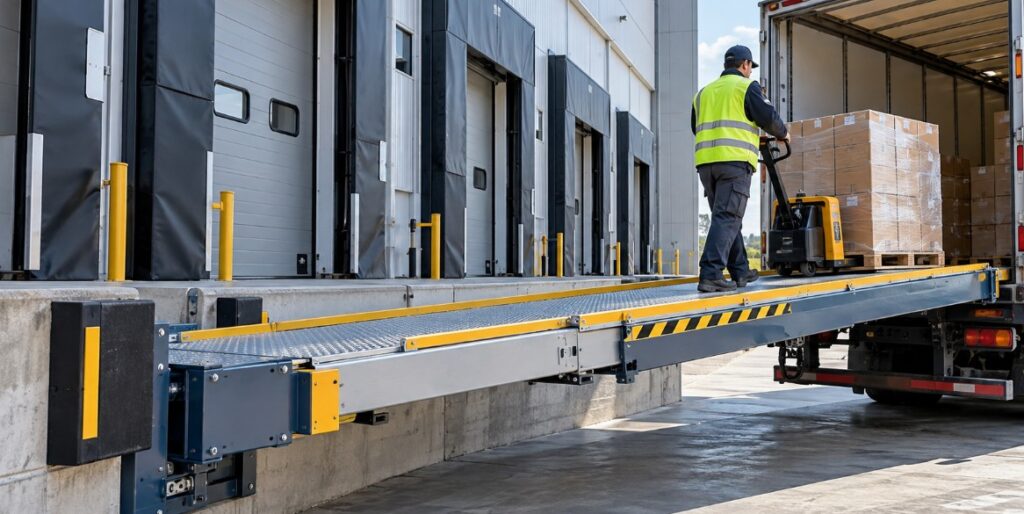
A telescopic dock leveler is a pit-mounted hydraulic dock leveler produced to eliminate the height difference between the vehicle body and the loading platform in industrial facilities such as warehouses and bonded warehouses. Its main difference from hinged lip levelers is that the lip is extendable (telescopic) rather than fixed. While the lip length of standard hinged lip levelers is about 400 mm, on telescopic levelers this distance can be extended from 600 mm up to 1,000 mm thanks to the hydraulic mechanism. This feature makes the telescopic leveler an indispensable solution, especially for container loading and situations where the lip of a hinged leveler cannot reach the vehicle body sufficiently.
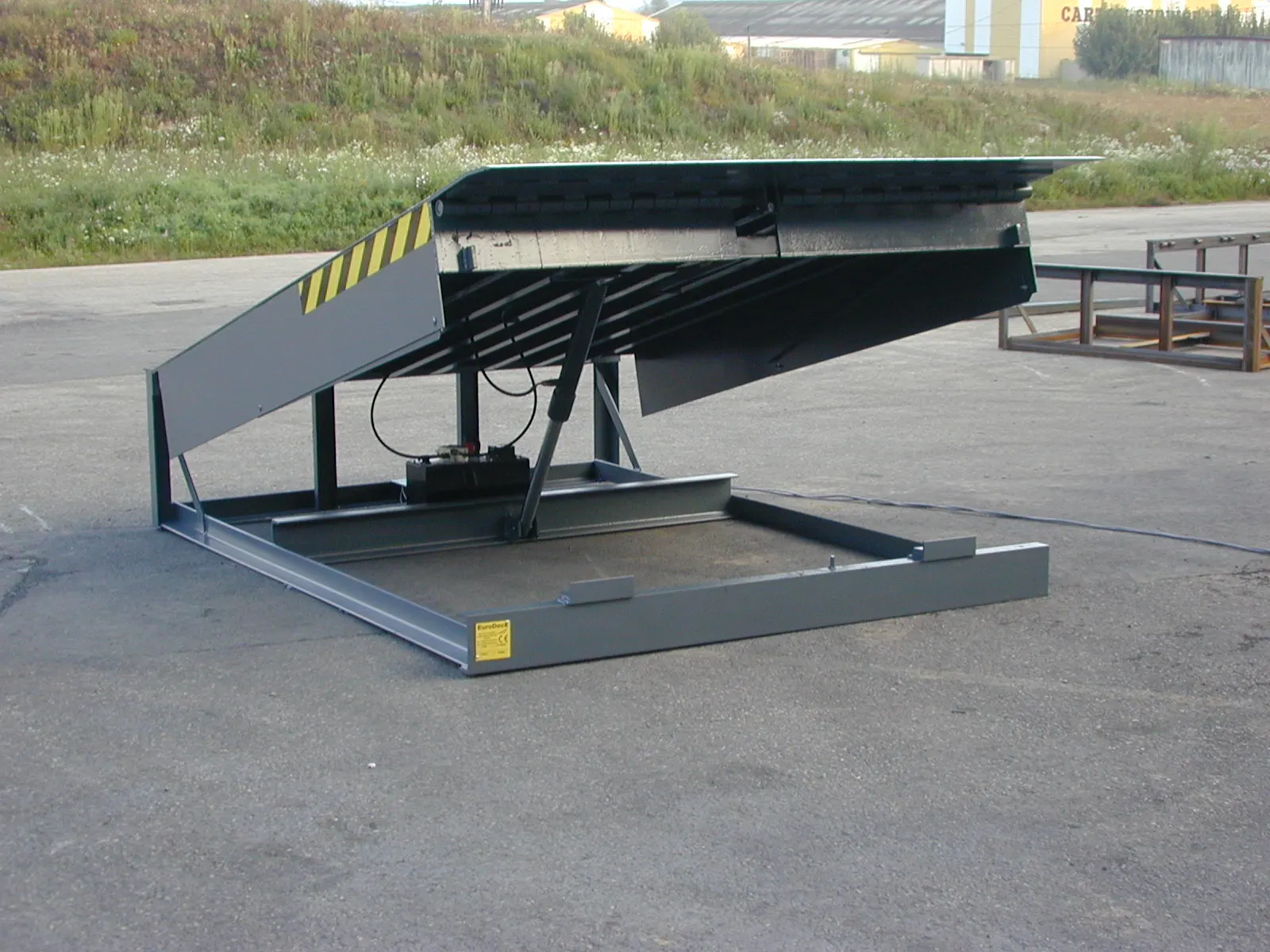
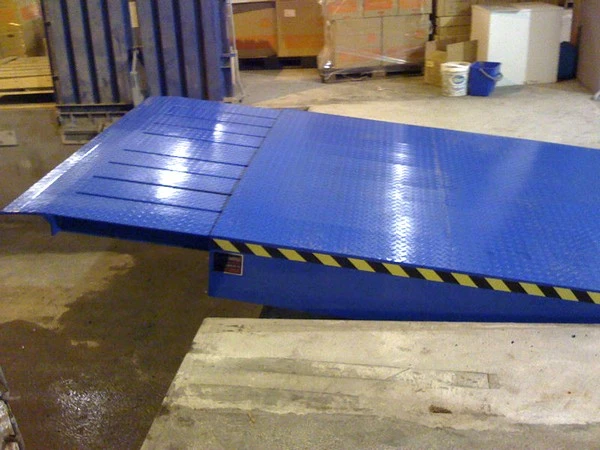
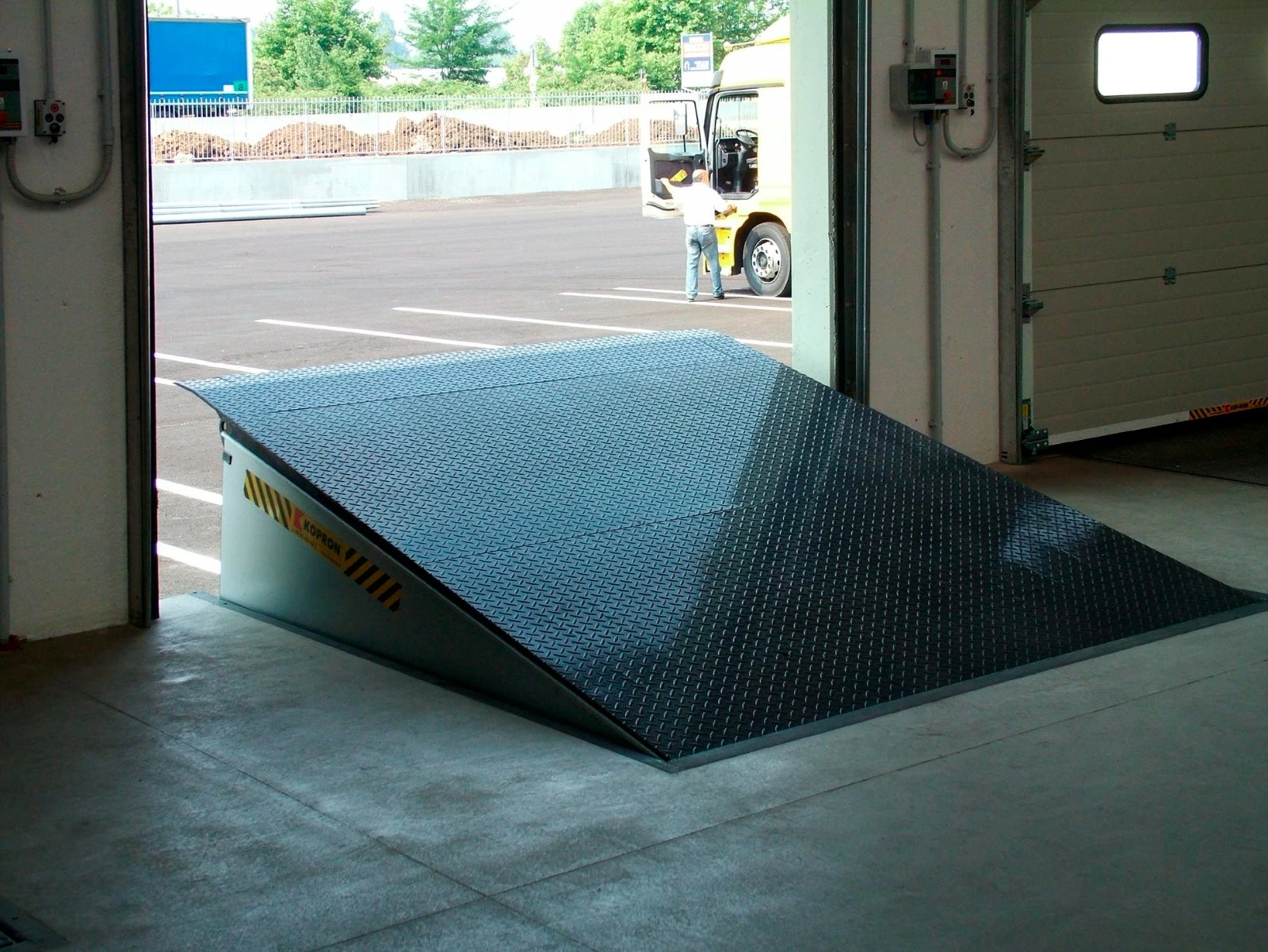
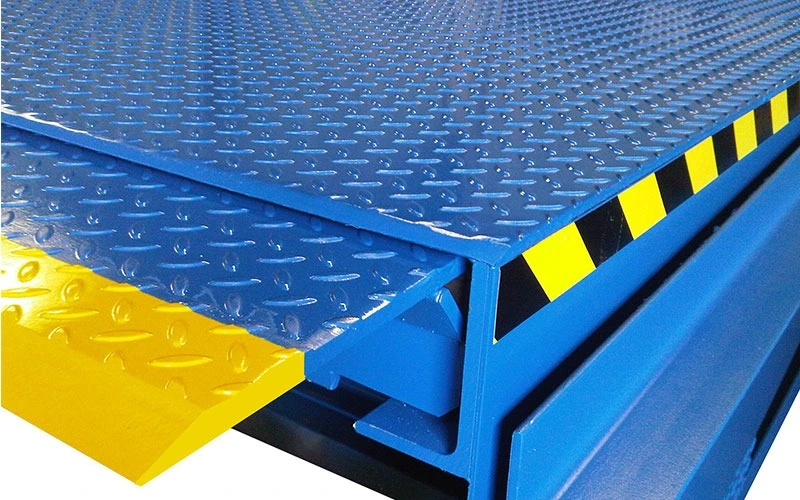
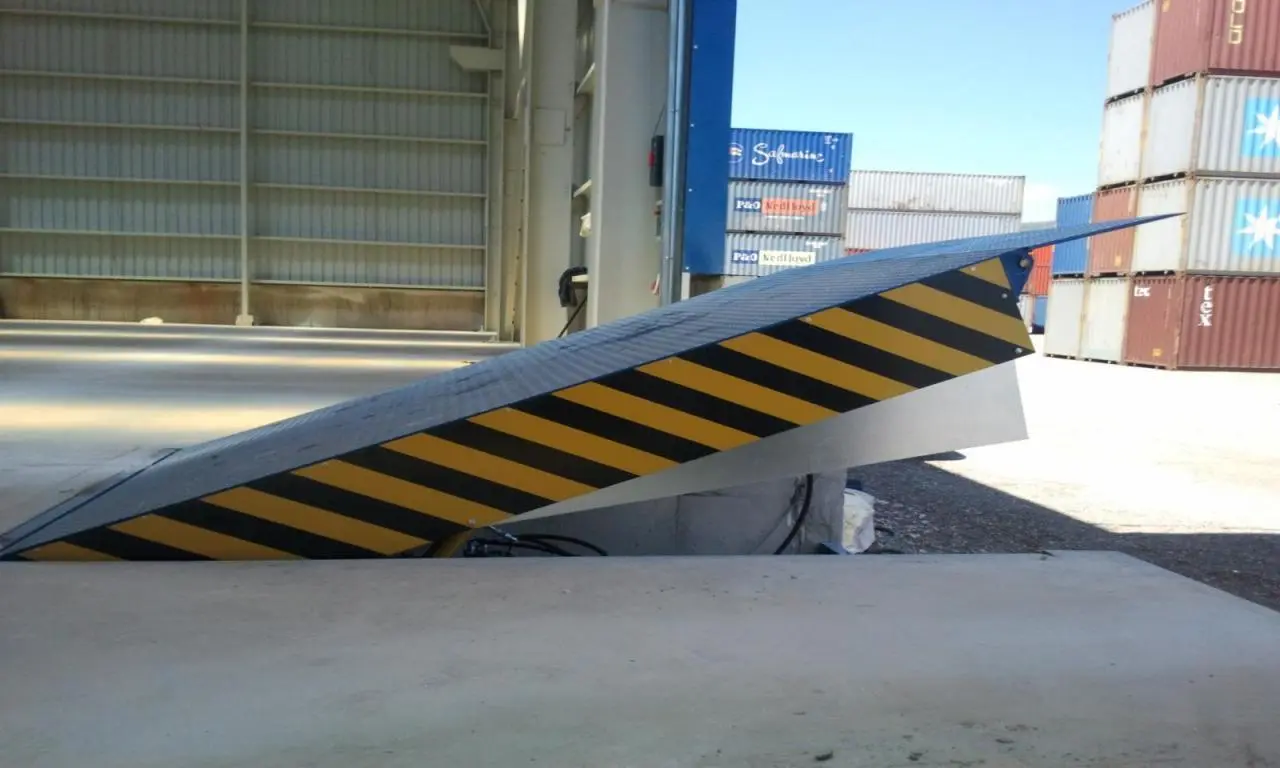
Structurally, the telescopic dock leveler consists of a main platform made of high-strength steel and a telescopic lip that can move back and forth hydraulically. The top surface of the main platform is covered with teardrop-pattern (chequered) sheet; this pattern prevents forklift wheels from slipping in rainy weather and in high-traffic loading areas. The telescopic lip is made of 12/13 mm thick high-strength sheet and has a special channel profile on its front edge that makes forklift passage easier. Installed recessed into the concrete floor, the telescopic leveler remains flush with the floor when not in use and creates no protrusion in the working area.
Telescopic dock levelers generally have a dynamic load capacity of between 6 and 10 tons; however, custom models of up to 25 tons are also available for heavy industrial applications. Standard platform sizes are 2000×2500 mm and 2000×3000 mm, but custom sizes can be produced according to the facility’s site conditions and vehicle types. All these features together make the telescopic leveler the most flexible type with the widest range of applications among loading systems.
Telescopic Dock Leveler Prices
Telescopic dock leveler prices may vary depending on platform size, load capacity, telescopic lip length and the conditions of the loading area where it will be installed. Current price information for the 2000 × 2500 mm, 6 ton capacity telescopic leveler is provided. For project-specific details and a quote, you can contact ALD Door .
Let’s Design a Telescopic Dock Leveler Suited to Your Container and Truck Loading
Share your loading door dimensions, vehicle types and container loading needs; we will prepare a turnkey telescopic dock leveler quote specific to your project, including lip length, load capacity and safety equipment.
How Does the Telescopic Dock Leveler System Work?
The telescopic dock leveler has a more advanced control system than the hinged lip leveler. There are 5 buttons on the control panel, each managing a different movement: raising the platform, lowering the platform, extending the lip, retracting the lip and emergency stop. After the vehicle docks at the loading point, the operator first presses the raise button; the hydraulic pump starts and sends pressurized oil to the main cylinder, raising the platform. When the platform reaches the desired height, the operator presses the lip extend button and the telescopic lip extends forward via the hydraulic cylinder and rests on the vehicle body. This two-stage control system gives the operator full control over both height and distance.
The most critical engineering advantage of the telescopic dock leveler is that the main cylinder and the lip cylinder can operate independently of each other. While the main cylinder adjusts the platform height, the lip cylinder controls the extension and retraction of the lip. There are separate speed control valves for each cylinder, so the platform’s lifting speed and the lip’s extension speed can be fine-tuned to operational needs. While the main pressure safety valve prevents motor overload at maximum lift, a separate secondary safety valve for the lip cylinder prevents uncontrolled movement of the lip.
What Advantages Does the Extendable Lip Provide in Loading Operations?
The extendable lip of the telescopic dock leveler makes its greatest contribution to loading operations in terms of flexibility and compatibility. On standard hinged lip levelers, the lip length is fixed and limited to about 400 mm; although this distance is sufficient for standard truck and lorry trailers, it falls short in container loading, especially when the vehicle cannot dock fully. Since the telescopic lip can be extended hydraulically from 600 mm up to 1,000 mm, it creates a safe bridge regardless of the distance between the vehicle body and the platform. This flexibility makes it possible to load vehicles of different sizes and types smoothly at the same loading point.
The second important advantage of the extendable lip is that it completely eliminates gap and level difference problems during loading. In container loading, a gap usually forms between the rear edge of the vehicle body and the leveler platform that is too wide for a hinged lip to close. The telescopic lip closes this gap precisely, minimizing jolts, vibration and the risk of materials falling during forklift and pallet truck passage. Since the lip extension can be stopped at any desired point from the control panel, the operator can individually set the optimum transition distance for each vehicle. This precise control significantly reduces material damage, especially in operations carrying fragile or sensitive materials.
In terms of operational efficiency, the large contact area provided by the telescopic lip directly shortens loading time. Instead of dealing with a narrow or short transition surface when entering the vehicle body, the forklift driver maneuvers quickly and safely on a wide and stable platform. This increases the number of pallets loaded per unit of time and saves considerable time, especially at busy shipping points where dozens of vehicles dock each day. In addition, the retractable structure of the telescopic lip keeps the platform compact when not in use, preventing unnecessary protrusions between loading doors and maintaining traffic flow within the facility.
Telescopic Dock Leveler Sample Product Images
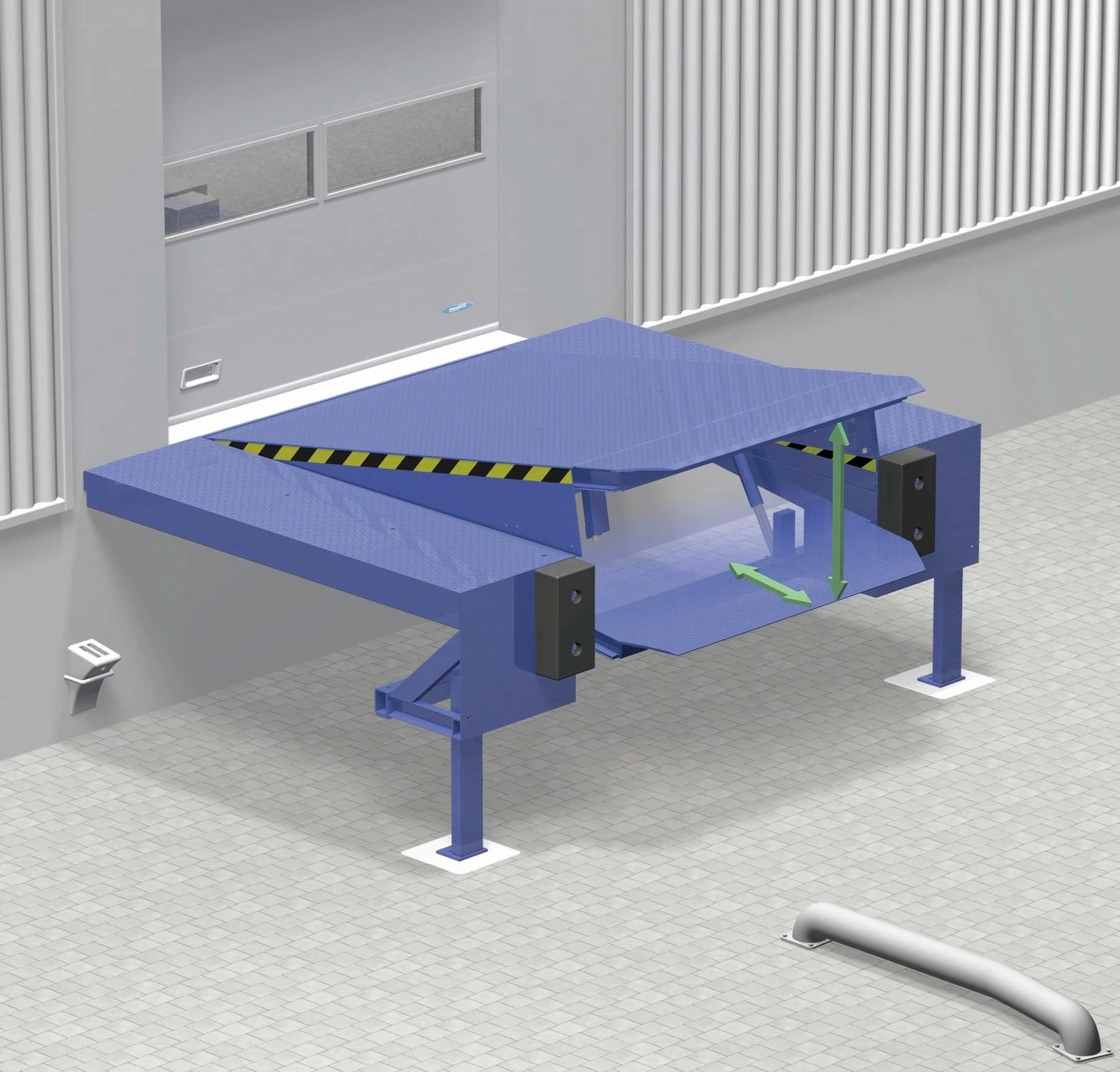
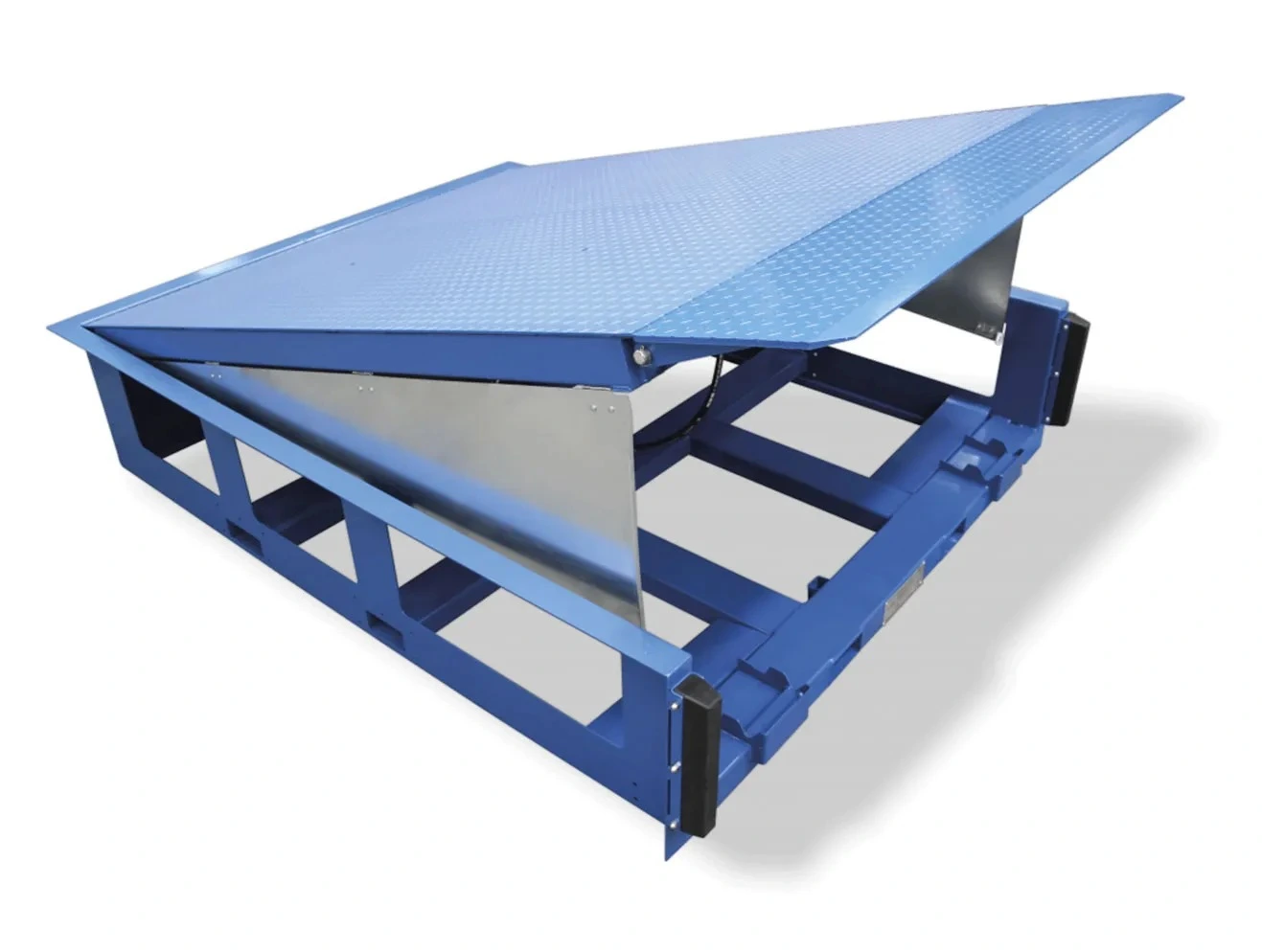
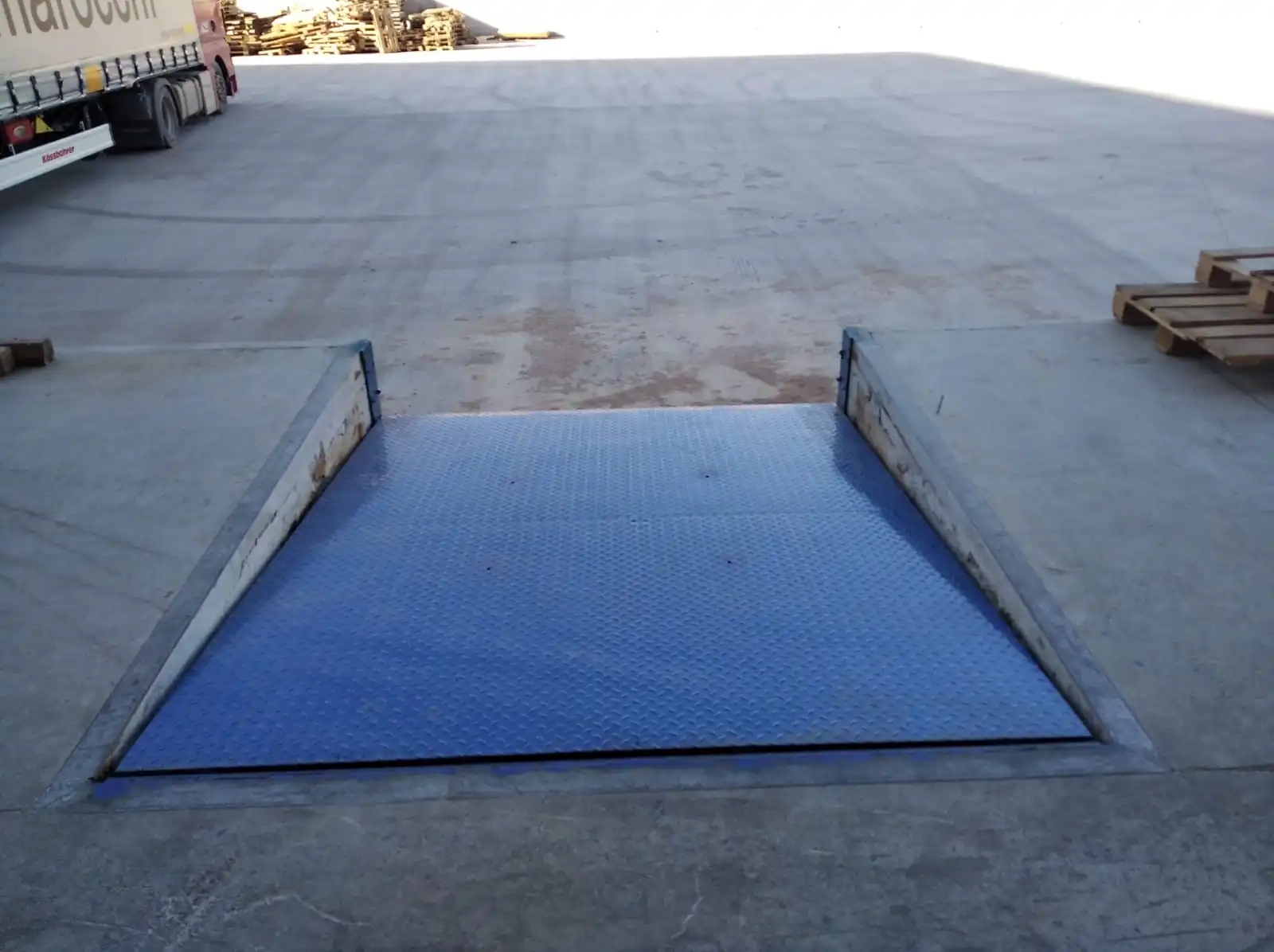
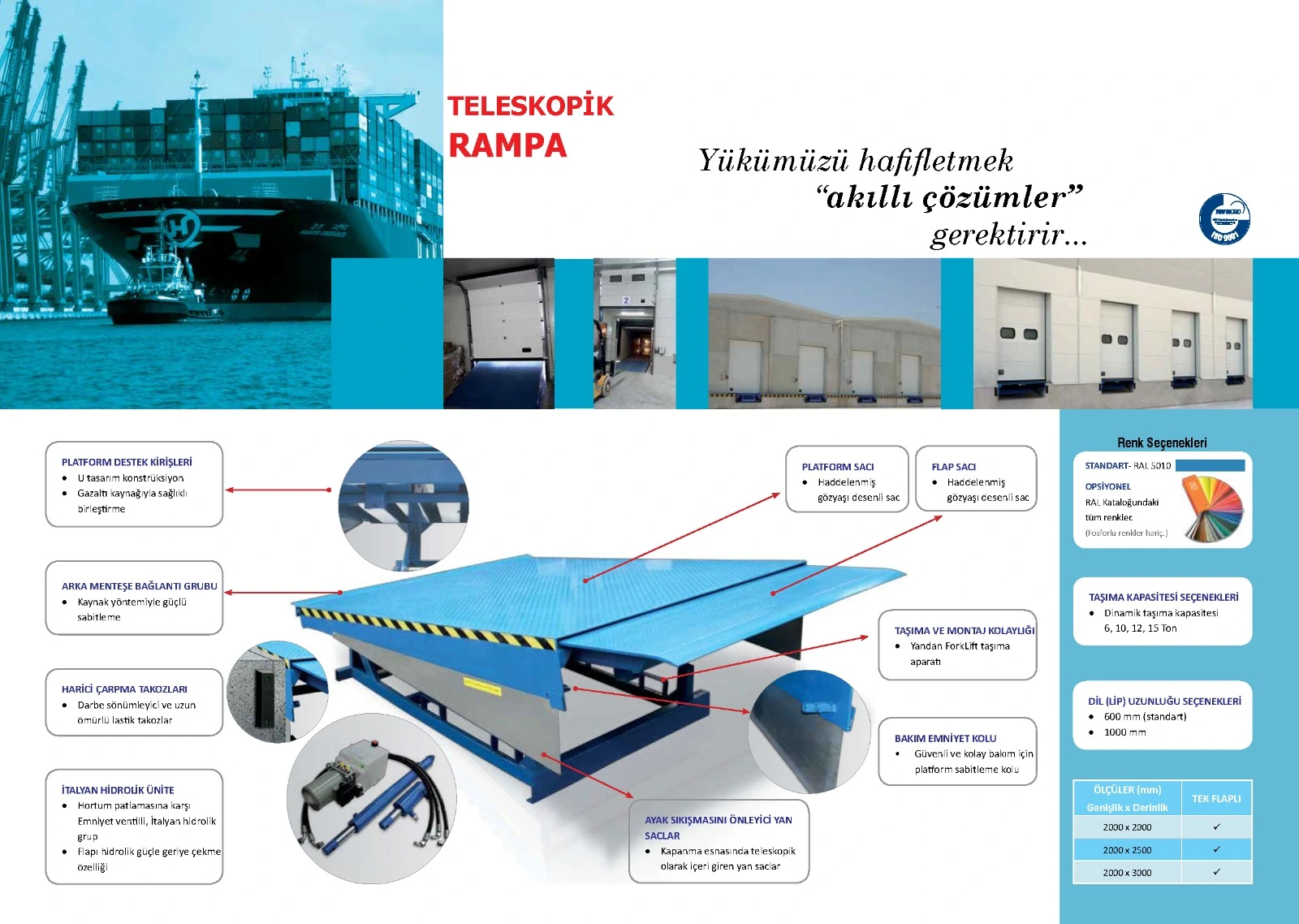
Telescopic Dock Leveler Product Video
Which Vehicles and Loading Areas Is the Telescopic Dock Leveler Suitable For?
The telescopic dock leveler is a versatile loading system designed for use with a wide range of vehicles and in various types of facilities. Thanks to its extendable lip, it comes to the fore in special loading scenarios where a hinged lip leveler falls short. The main areas of use and compatible vehicle types are:
Container Loading: This is the most critical area of use for the telescopic leveler. Container bodies are deeper and of different heights compared to standard truck trailers; the 400 mm lip of a hinged leveler cannot reach this depth. The telescopic lip’s ability to extend from 600 mm to 1,000 mm ensures full contact with the rear edge of the container and creates a safe bridge for forklift passage. For import-export businesses, bonded customs warehouses and port-side warehouses, the telescopic dock leveler is a standard requirement.
Logistics and Distribution Centers: Regional distribution centers of large retail chains, e-commerce fulfillment facilities and cargo transfer hubs are facilities where vehicles of different sizes and heights dock at the same loading door. Adapting to all different vehicle types such as vans, trucks, lorries and container carriers from a single leveler is possible thanks to the operational flexibility of the telescopic leveler.
Warehouse and Factory Facilities: In production and storage facilities in the food, automotive, pharmaceutical, textile and FMCG sectors, raw material receipt and finished product dispatch take place with different vehicle types. The telescopic dock leveler adapts to this variety from a single point, optimizing the number of loading doors and increasing space efficiency.
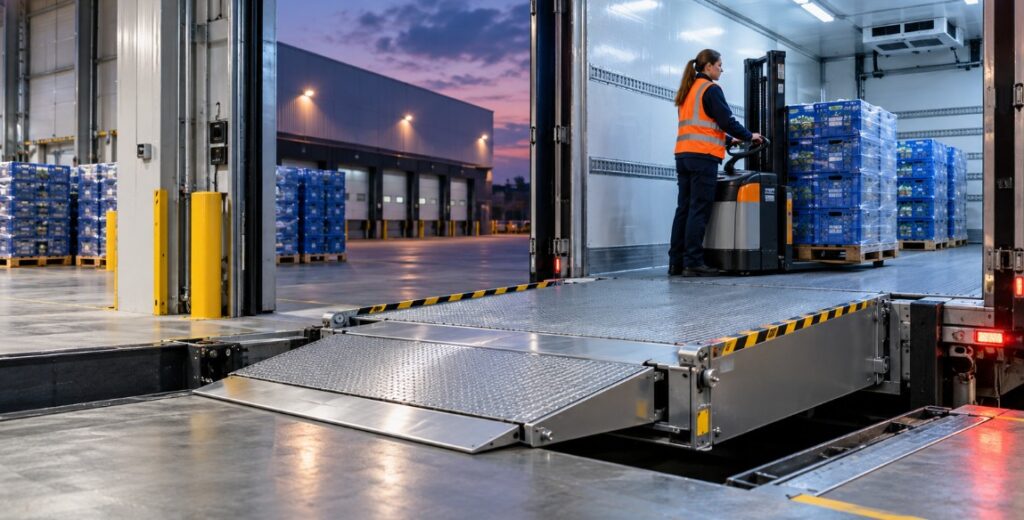
Cold Storage Facilities: In cold chain logistics, every minute the loading door stays open means energy loss and a product safety risk. The fast extension and retraction of the telescopic leveler speeds up forklift passage and minimizes the time the door stays open.
Organized Industrial Zones and Free Zones: In organized industrial zone facilities and free zone trade centers working with heavy vehicle traffic and various vehicle types, the telescopic leveler’s dynamic load capacity of between 6 and 10 tons (up to 25 tons as required) and its extendable lip meet every loading scenario.
Shipyards and Heavy Industry Logistics Areas: In shipyard logistics areas and heavy industrial facilities where large and heavy parts are loaded and unloaded, high-tonnage telescopic leveler models provide a safe and stable platform.
What to Consider Before Buying a Telescopic Dock Leveler
The most decisive step in a telescopic dock leveler investment is correctly analyzing the facility’s operational profile. How many vehicles will dock each day, their types (truck, lorry, container carrier, refrigerated vehicle), whether forklifts or pallet trucks will be used for loading and the average and maximum weights of the loads directly determine the leveler’s load capacity and platform dimensions. Whether container loading will be done is a particularly critical question; because if there is no container loading, a hinged lip leveler may be sufficient, while with containers a telescopic leveler becomes essential. Standard telescopic levelers are generally produced in sizes of 2000×2500 mm and 2000×3000 mm with a dynamic load capacity of 6 to 10 tons; however, if the facility’s needs go beyond these standards, custom size and capacity options should be considered.
The choice of technical equipment and lip length should be as decisive as price in the purchase decision. Whether the telescopic lip will be 600 mm, 800 mm or 1,000 mm is determined according to the facility’s loading scenarios. While a long lip is preferred in container-heavy operations, a medium length may be sufficient in facilities with mixed loading. The lip sheet thickness (standard 12/13 mm), front edge channel profile, teardrop-pattern surface quality and the technical specifications of the hydraulic unit (motor power, pump capacity, operating pressure) are also parameters to consider when comparing offers. A 5-button control panel, emergency stop button, hose burst valve, double safety valves (main and secondary), maintenance support leg, side guards and rubber dock bumpers should be standard on every telescopic dock leveler.
ALD Door offers site survey and technical consultancy for your telescopic dock leveler projects and determines together with you the solution best suited to your facility’s loading scenarios.
Contact Us
You can send us any request, suggestion or complaint regarding our company, products and services: