Inflatable Dock Shelter
An inflatable dock shelter is a high-sealing loading shelter system that closes the gap between the loading door and the vehicle body in industrial facilities such as warehouses and bonded warehouses by means of cushions inflated with air pressure. Its main difference from conventional mechanical shelters is that the vehicle does not need to push against the shelter to create contact. With an inflatable shelter, once the vehicle docks at the loading point, a fan unit is activated and inflates the air cushions on the sides and top of the shelter in a controlled manner, forming an almost airtight sealing ring around the vehicle. Thanks to this mechanism, hot or cold outside air cannot get in, and conditioned indoor air cannot escape.
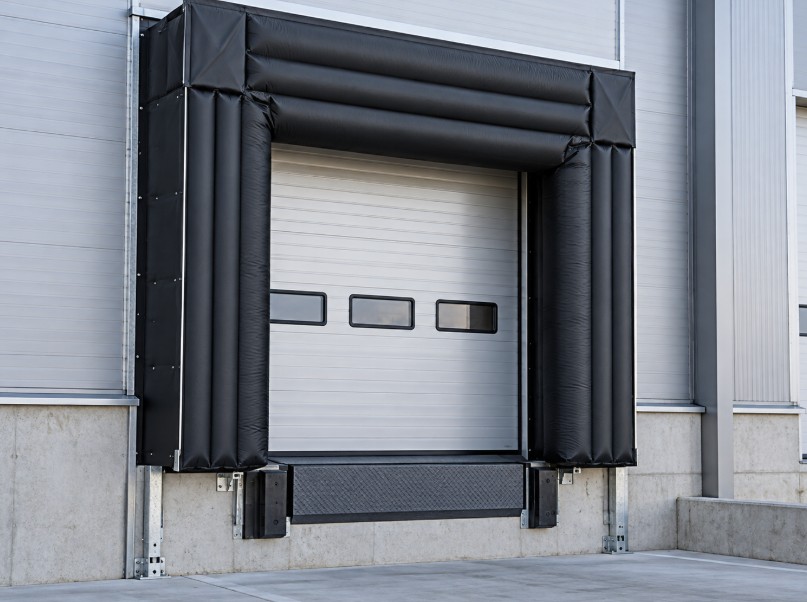
Structurally, the inflatable dock shelter consists of inflatable side and top air cushions mounted on a galvanized steel frame. The cushions are made of 1000D Cordura-type woven nylon-coated fabric with high tear strength, water resistance and abrasion resistance. The side and top panels are fully insulated; this insulation layer prevents heat transfer and ensures the cushions remain flexible even at low temperatures. Mounted on the outer wall of the building, the inflatable shelter practically encloses the vehicle in a sealed chamber, preventing dust, insects, moisture, rain and wind from entering through the loading door as much as possible.
Inflatable Dock Shelter Prices
Inflatable dock shelter prices may vary depending on the system’s dimensions, the curtain and fan equipment used and the conditions of the installation area. Current price information for the inflatable shelter system is provided. For project-specific details and a quote, you can contact ALD Door .
Discover Our Inflatable Dock Shelter Solution for Maximum Sealing at Your Loading Point
Share your loading door dimensions, temperature control needs and vehicle types; we will prepare a custom inflatable dock shelter design and a turnkey quote for your facility.
Inflatable Dock Shelter Product Video
How Does an Inflatable Dock Shelter Work?
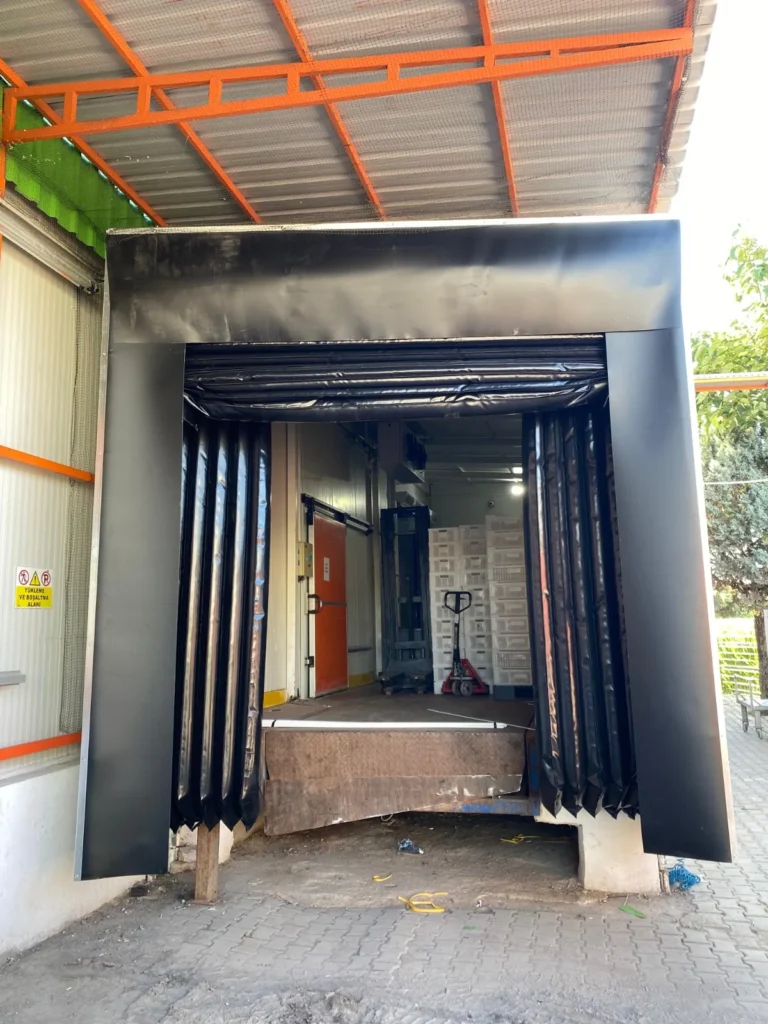
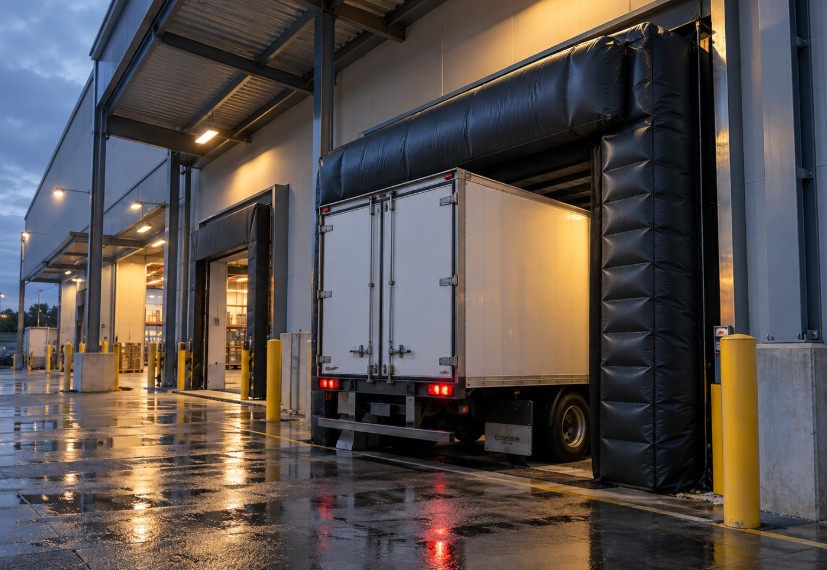
The working principle of the inflatable dock shelter is based on cushions inflated by controlled air pressure making full contact around the vehicle body. The process begins with the vehicle docking at the loading door in the correct position. Once the vehicle is positioned, the operator activates the fan unit from the control panel. The centrifugal fan starts running and air is pumped in a controlled manner into the air cushions on the side panels and top of the shelter. Within 10 to 20 seconds, the cushions fully inflate and press firmly against the sides and roof of the vehicle, creating a sealed area with almost no gap between the vehicle and the building. After this stage, the sectional door is opened and loading or unloading begins.
The most obvious difference between inflatable and mechanical shelters is the type of contact. With mechanical shelters, the vehicle creates the sealing area by pushing the shelter’s flexible arms as it docks; this physical pressure can cause rapid wear of the shelter material as well as damage to the paint and surface of the vehicle body. With an inflatable shelter, contact is provided entirely by air pressure; the cushions settle gently on the vehicle surface without applying mechanical pressure. This significantly extends the life of both the shelter and the vehicle body. In addition, the inflatable cushions flexibly follow the vehicle’s suspension movements during loading (lowering as it is loaded, rising as it is unloaded), maintaining the seal throughout the operation.
When loading or unloading is complete, the sectional door is closed and the fan is switched off. Thanks to the counterweight system, the air cushions deflate automatically and retract to their parked position behind the cover curtains, and the vehicle can leave safely. The entire process takes place without any physical contact or mechanical intervention. The control panel continuously shows the fan status and the operating position of the shelter.
Advantages of Inflatable Dock Shelters
The most obvious advantage of the inflatable dock shelter is that it offers the highest sealing performance in the dock shelter category. The cushions inflated with air pressure make full contact with the sides and roof of the vehicle, creating an almost airtight barrier between the vehicle and the building. This superior sealing translates directly into energy savings, especially in temperature-controlled facilities. In cold stores and freezer facilities, heat loss while the loading door is open is minimized thanks to the inflatable shelter; air-conditioning systems maintain the target temperature while using less energy. This lowers electricity bills and reduces carbon emissions, contributing to environmental sustainability.
In terms of hygiene and product safety, the inflatable dock shelter is indispensable equipment for facilities storing food, pharmaceuticals and sensitive products. Thanks to full sealing, the entry of dust, insects, moisture, rain and wind from outside is almost completely prevented. This protection directly affects the quality and shelf life of stored products; especially in cold chain logistics, it eliminates the risk of thawing or temperature deviation during loading. For compliance with food safety standards such as HACCP, ISO 22000 and GMP, the inflatable shelter is one of the critical infrastructure elements auditors look for in the loading area. In pharmaceutical and vaccine distribution centers, the cold chain cannot be reliably maintained even at the loading point without an inflatable shelter.
ALD Door designs its inflatable dock shelter systems specifically for your facility’s temperature control needs and vehicle profile.
In Which Loading Operations Is the Inflatable Dock Shelter Preferred?
The inflatable dock shelter is the top-level shelter solution preferred in loading operations where temperature control and sealing are critical. It offers clear advantages in environments requiring high insulation where mechanical shelters are not sufficient. The main loading operations where it is preferred are:
Cold Stores and Freezer Facilities: This is the most common and most critical area of use for the inflatable shelter. In freezer facilities operating between -25°C and -40°C, every second the loading door is open causes serious energy loss and a risk of breaking the cold chain. The inflatable shelter minimizes these losses by creating an almost airtight barrier between the vehicle and the building. The special material of the cushions, which remains flexible even at low temperatures, provides reliable performance in freezing conditions.
Food Production and Processing Facilities: Food safety standards such as HACCP, ISO 22000 and GMP require preventing the entry of dust, insects and outside air in loading areas. The full sealing of the inflatable shelter meets the level of hygiene these standards require. In meat, dairy, ready-meal, beverage and bakery production facilities, the inflatable shelter is one of the basic infrastructure elements sought during audits.
Pharmaceutical and Biotechnology Warehouses: In facilities storing pharmaceuticals, vaccines and biological materials, where temperature and humidity control directly affect product quality, the inflatable shelter maintains the integrity of the conditioned environment even during loading. A break in the cold chain at the loading point can render the product completely unusable; the inflatable shelter eliminates this risk.
Textile and Sensitive Product Warehouses: In warehouses for textiles, electronic components and sensitive materials, where moisture and dust adversely affect product quality, the inflatable shelter keeps indoor conditions stable, reducing product damage and waste.
Large-Scale Distribution Centers: In regional distribution centers of supermarket chains, e-commerce fulfillment facilities and cargo transfer hubs, the flexibility to accommodate vehicles of different sizes with a single shelter increases operational efficiency. In heavy loading traffic, the fast inflation and deflation time of the inflatable shelter speeds up the vehicle turnaround cycle.
Chemical and Hazardous Material Warehouses: In chemical storage facilities where contact with the outside environment must be minimized, the inflatable shelter provides maximum environmental isolation during loading, protecting both product safety and employee health.
What to Consider Before Buying an Inflatable Dock Shelter
The first and most decisive step in an inflatable shelter investment is to correctly analyze whether the facility really needs this level of sealing performance. Not every facility requires an inflatable shelter; in warehouses operating at standard temperatures without high sealing expectations, a mechanical shelter may be a sufficient and more economical solution. However, in facilities where temperature control is critical, such as cold stores, freezer facilities, food production areas and pharmaceutical warehouses, the inflatable shelter is an investment that quickly pays for itself in terms of energy savings and product safety. The types and dimensions of the vehicles docking at the loading door are also important; if vehicles of different widths and heights are used, the inflatable shelter’s range of movement must be sufficient to accommodate this variety.
Installation conditions and after-sales service capacity directly affect the total investment cost. The dimensions of the loading door, the structural condition of the building’s outer wall and compatibility with the existing sectional door system should be evaluated on site before installation. Since the inflatable shelter contains more technical components than a mechanical shelter (fan unit, control panel, air cushions, counterweight system), its periodic maintenance requirements are more detailed; fan checks, cushion seal tests, fabric wear checks and electrical connection inspections should be carried out at regular intervals. The manufacturer’s technical service network, availability of spare cushions and fans, warranty coverage and breakdown response time are critical factors determining the long-term cost of ownership.
ALD Door carries out site surveys for your inflatable dock shelter projects and determines together with you the configuration best suited to your facility’s temperature control needs and loading door dimensions.
Contact Us
You can send us any request, suggestion or complaint regarding our company, products and services: