Vertical Dock Levelers
A vertical dock leveler is a hydraulic dock leveler with practical installation, developed to meet loading needs in facilities where a pit cannot be made in the concrete floor or where construction has already been completed. Unlike hinged lip and telescopic levelers, it does not require a concrete pit; it is anchored directly onto the existing loading platform. Since the platform can be raised to a fully vertical position and locked when not in use, it takes up no space in the loading area, leaves the door front completely free and does not obstruct forklift and pedestrian traffic within the facility. These features make the vertical dock leveler the most preferred type, especially in rented facilities, businesses that need a leveler later on and loading points with limited space.
Vertical dock levelers have a dynamic load capacity starting from 6 tons and can be custom-made with higher capacities according to the business’s needs. Platform dimensions are determined according to the facility’s loading door width and vehicle types; in addition to standard production, custom sizes are also possible. The number of anchors and the sheet thickness are calculated at the design stage depending on the specified loading tonnage. CE-certified vertical dock levelers are produced in compliance with occupational safety standards and delivered together with commissioning tests after installation.
Vertical Dock Leveler Prices
Vertical dock leveler prices may vary depending on the platform size, purpose of use and the conditions of the loading area where it will be installed. Current price information for the 2000 × 1500 mm vertical dock leveler is provided. For project-specific details and a quote, you can contact ALD Door .
Equip Your Facility with a Vertical Dock Leveler That Can Be Installed Without a Pit
Share your loading door dimensions, floor condition and vehicle types; we will prepare a vertical dock leveler quote tailored to your capacity and size needs, to be mounted on your existing floor without any construction work.
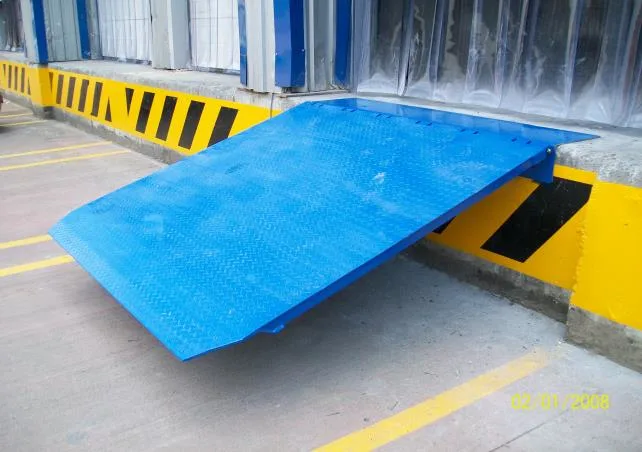
Vertical Dock Leveler Sample Product Images
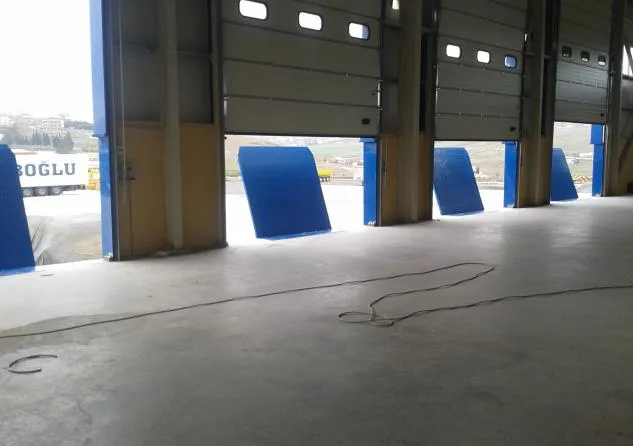
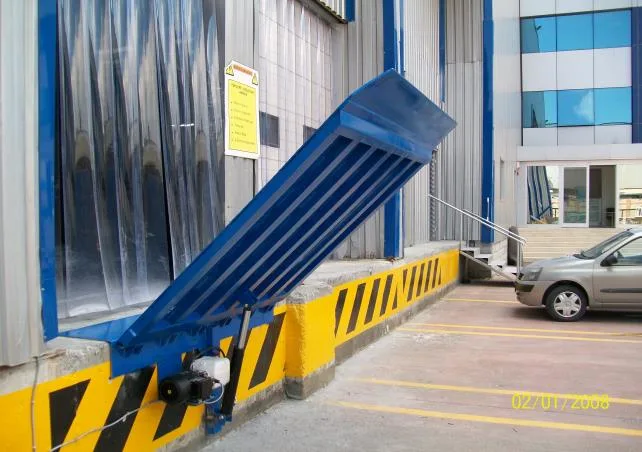
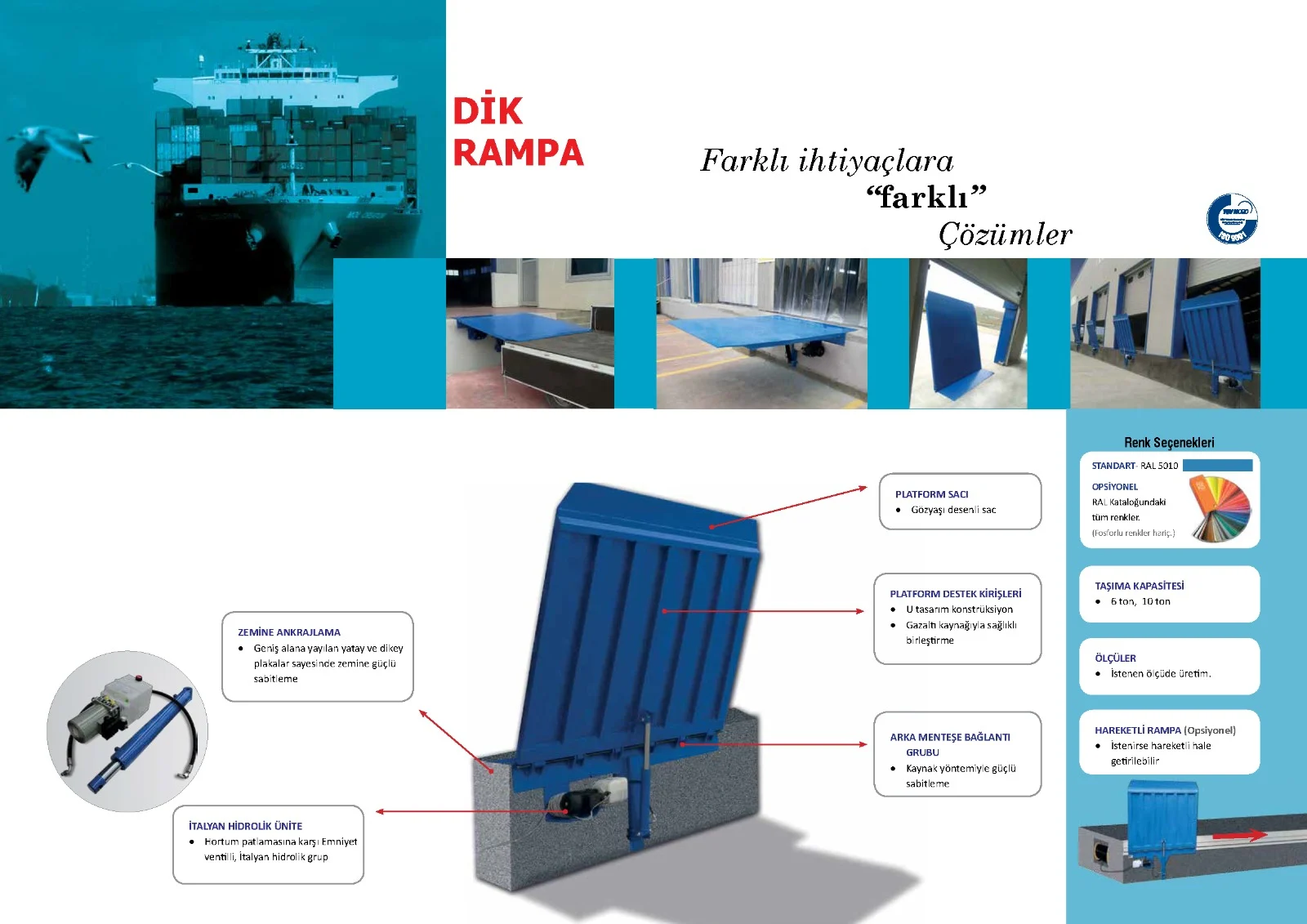
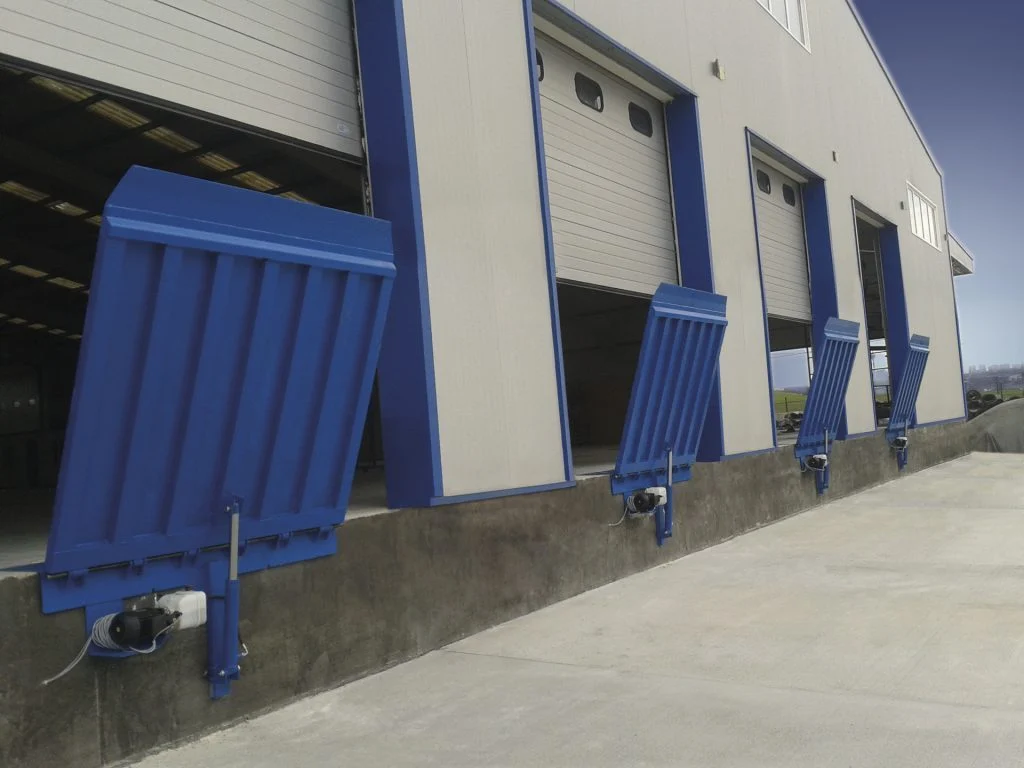
Vertical Dock Leveler Product Video
How Does the Vertical Dock Leveler Work?
The vertical dock leveler is a very practical piece of loading equipment that works with an electro-hydraulic system and control panel. The vehicle to be loaded docks and stops at a certain distance from the loading point. The operator activates the hydraulic unit by pressing the button on the control panel; the cylinders are pressurized and the platform in the vertical position slowly opens forward to a horizontal position. When the platform reaches the loading level, the hinged lip opens forward and rests on the trailer, creating a solid transition surface between the warehouse floor and the vehicle body. When loading or unloading is complete, the platform is raised back to the vertical position with the same button system and secured with a safety lock.
One of the most important technical advantages of the vertical dock leveler is its dual operating system. The primary system, the electro-hydraulic unit, allows the platform to be raised, lowered and leveled via the buttons on the control panel. The secondary system is a manual hand pump; in the event of a power cut, panel failure or any energy problem, the operator can open the return valve of the hand pump and operate the vertical leveler manually. This ensures loading operations are never interrupted. The warning light on the control panel continuously shows whether the leveler is in a safe operating condition; since every load passing over the leveler would apply force directly to the cylinders if loading is done while the light is off, the warning system is a key element of operational safety.
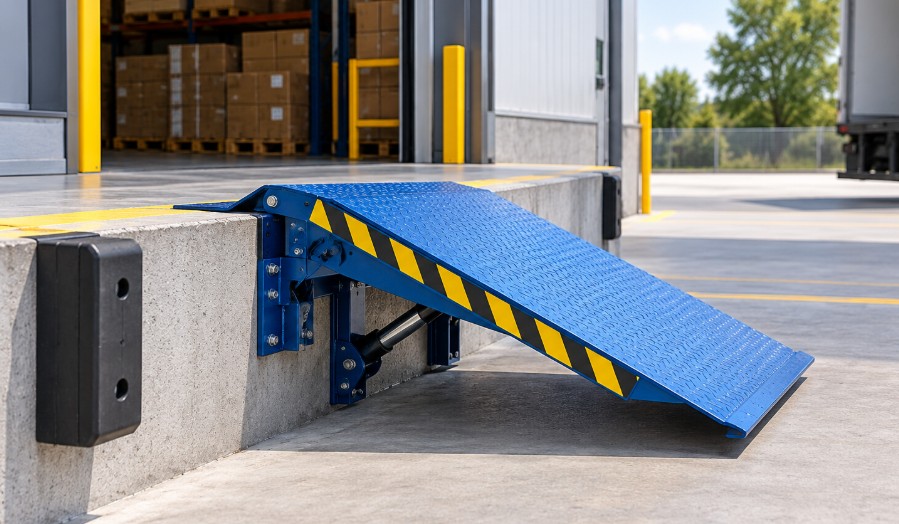
In terms of safety equipment, the vertical dock leveler comes standard with a hydraulic hose burst valve, yellow-black safety markings and profile support preventing vehicle impact. The hose burst valve instantly prevents the platform from falling uncontrollably in the event of an unexpected hydraulic failure. During loading, the main element bearing the weight of the load is the steel structure; the cylinders only move the platform and do not carry the operational load. This design principle extends the life of the hydraulic system and lengthens maintenance intervals. Where the concrete dock level is very low, a fixed ramp can be added beneath the vertical leveler to make up the height difference; this flexibility makes it easy to adapt to different site conditions.
In Which Loading Areas Does the Vertical Dock Leveler Offer Advantages?
The vertical dock leveler offers the most practical solution at any loading point where making a concrete pit is not technically or economically feasible. Thanks to its vertical parking feature and easy installation, it offers clear advantages in many different types of facilities. The main areas of use are:
Facilities Whose Construction Is Complete: This is the most common scenario in which the vertical leveler is chosen. Where the facility’s construction is finished, the floor concrete has been poured and a leveler is needed later on, making a concrete pit is both costly and structurally risky. The vertical leveler is anchored onto the existing concrete floor without any additional construction work and put into service in a short time.
Rented Facilities and Warehouses: The vertical leveler is an ideal solution for tenant businesses. It is easy to install and also simple to remove; when the business moves, the vertical leveler can be dismantled and taken to the new facility. A professional loading system is set up without making a permanent and costly infrastructure investment such as a concrete pit.
Two-Storey Businesses and Areas with Large Height Differences: In two-storey businesses where the loading platform is high above the ground, the height difference between the vehicle body and the platform may not be bridged with standard levelers. When needed, the vertical leveler can adapt to such large height differences by adding a fixed ramp beneath it.
Food and Pharmaceutical Warehouses (Areas Requiring Hygiene): When not in use, the vertical leveler moves to the vertical position and completely closes off the door front. This prevents dust, insects and moisture from entering from outside, offering an important advantage in food and pharmaceutical warehouses where hygiene standards are critical. In addition, there is no leveler pit to clean in the vertical position, because there is no pit at all.
Loading Areas Without Edge Angles: In some facilities, there is no standard edge angle on the sides of the loading door. Pit-type levelers can be difficult to install in this case. Vertical dock levelers can easily be installed in loading areas without edge angles.
Loading Points with Limited Space: In facilities where the area in front of the loading door is limited, the vertical parking feature of the leveler offers a great advantage. When not in use, the leveler leaves the loading area completely free; this area can be used for forklift maneuvers, pedestrian passage or temporary storage.
What Conditions Are Required to Install a Vertical Dock Leveler?
Although the vertical dock leveler requires much less infrastructure preparation than other leveler types, certain installation conditions must be met for safe and efficient operation. The first and most basic condition is that the concrete floor where it will be mounted has sufficient strength. Since the vertical leveler is fixed directly to the concrete floor with anchor bolts, the load-bearing capacity of the concrete must be sufficient to safely bear the leveler’s dynamic load capacity. The number and diameter of anchors are calculated at the design stage according to the leveler’s tonnage. The thickness, age and quality of the concrete should be evaluated on site before installation, and the concrete should be reinforced if necessary.
The dimensions and position of the loading door are another decisive factor in choosing a vertical dock leveler. The platform width must be compatible with the loading door opening and sized so that it can completely close the door opening when in the vertical position. The height of the door’s top edge must be sufficient for the leveler’s total height in the vertical parking position; otherwise the leveler cannot reach a fully vertical position. The height of the loading platform above the ground is also important; where the concrete dock level is very low, the height difference is compensated by adding a fixed ramp beneath the platform.
ALD Door carries out site surveys for your vertical dock leveler projects, evaluating your floor condition and loading door dimensions on site to determine the most suitable configuration.
What to Consider Before Buying a Vertical Dock Leveler
Before buying a vertical dock leveler, the structural condition and operational needs of the facility must be analyzed correctly. The first question to ask is whether making a concrete pit is really impossible; because if a pit can be made, a hinged lip or telescopic leveler may offer a wider range of movement and compatibility with more vehicles. The vertical leveler is the most suitable solution for facilities where a pit cannot be made or construction is complete. Daily loading frequency, the types of vehicles docking and the weight of the loads to be carried are the basic parameters that directly determine the leveler’s load capacity and platform dimensions. The width of the loading door, the height of its top edge and the thickness of the concrete floor must also be measured at the design stage.
Technical equipment and material quality should be as decisive as price in the purchase decision. The quality of the steel profiles used in the subframe, platform sheet thickness, the adequacy of the non-slip surface pattern, the technical capacity of the hydraulic unit and the features of the control panel (warning light, emergency stop button) should be considered when comparing offers. A hose burst valve, safety markings and vehicle impact protection profile support should be standard on every vertical dock leveler. Whether a manual hand pump alternative is available is also an important selection criterion, especially for facilities at risk of power cuts.
Since one of the biggest advantages of the vertical dock leveler is its removable and portable structure, long-term usage scenarios should also be considered in the purchase decision. If you are in a rented facility, being able to dismantle the leveler and move it to a new location is a major plus. After-sales service capacity, spare parts availability, warranty coverage and periodic maintenance support are also critical factors affecting the total cost of ownership. Asking for a turnkey price including installation, commissioning tests and operator training at the quotation stage prevents additional costs that may arise later.
As ALD Door, we offer site survey and technical consultancy for your vertical dock leveler projects and determine together with you the solution best suited to your facility’s structural condition.
Contact Us
You can send us any request, suggestion or complaint regarding our company, products and services: